CONTROLLED-PROCESS
WIRE HARNESSING.
FROM CAVITE.
A non-China assembly option for US OEM and procurement teams executing China+1 sourcing strategies. A Cavite Economic Zone joint venture between Cloom Tech(OurPCB Group's wire-harness arm — IPC/WHMA-A-620 Class 3 workmanship) and Xudong Group (precision manufacturer founded 2002, operations in CN/HK/JP/PH/TH). A documented non-XUAR input supply chain and a China+1 origin that, when product qualifies as Philippine origin, falls outside the legacy China-specific Section 301 tariffs (most Philippine products carry a separate 12.5% Section 301 duty since July 24, 2026).
ISO9001
Quality System
7-15DAYS
Lead Time
1PIECE
MOQ
<12HOURS
Quote Reply
Why Cavite
FOUR REASONS YOUR
HARNESS PROGRAM
KEEPS SLIPPING.
Problem #1
China-origin tariffs are eating your landed cost
Product that qualifies as Philippine origin is not subject to the legacy China-specific Section 301 tariffs, though most Philippine goods have carried a separate 12.5% Section 301 duty since July 24, 2026. Your customs broker makes the final determination.
Problem #2
Suppliers ghost you for 5 days before quoting
12-hour quote turnaround backed by a J-QMS engineering desk, not a sales rep.
Problem #3
Translation latency between your engineer and theirs
English-first plant, Japanese trainer cadre, Tagalog-speaking line leads — one Slack channel.
Problem #4
Single-source China risk every time procurement asks for a non-China alternative
Cavite is your audit-ready China+1 site — labor and input traceability for UFLPA review, a certificate of origin documenting Philippine origin so that qualifying product shifts out of the China-specific Section 301 tariffs, and parent-group BOM and tooling depth available on call when your program needs it.
Technical Capabilities Matrix
CLOOM HARNESS RIGOR.
XUDONG TOOLING DEPTH.
Cloom Tech's 5,000 m² wire-harness program transplanted into Xudong's Cavite plant — IPC/WHMA-A-620 Class 3 with in-house overmold tooling.
Structural Integrity Crimping
Four-point cross-sectional analysis with Komax KMK pull-force calibration to ±5 N. 22 AWG terminals routinely exceed 60 N pull strength against the IPC-A-620 Class 3 minimum of 40 N.
JIS-Standard Braiding
Industrial-grade EMI shielding using JIS C 3406 tinned-copper braid. Validated for 10 million flex cycles on robotic harnesses.
Automated Continuity Testing
100% Cirris CR/CH automated continuity, dielectric, and HiPot testing with serialized result logging tied to each harness barcode.
Electromechanical Box Build
Enclosure population with thermal management modeling. Up to 1,200-component assemblies on the line today.
Precision Overmolding
In-house mold tooling rated for 50,000+ flex cycles. Single-shot TPE/PVC overmold up to 65 Shore-A on cable strain reliefs.
Environmental Stress Testing
Salt-fog (96 h), thermal shock (-40 / +85 °C), and IP67 immersion verification on every new program before PPAP submission.
Group manufacturing depth
Backshells & Overmolds — Made by Our Group's Mold Engineers
Many Cavite-based wire harness manufacturers send connector backshells and overmolds to third-party mold shops in Shenzhen or Taiwan, adding weeks of NRE turnaround to every new program. xdpigo keeps that work inside the parent group. The same mold-engineering team behind 96-cavity precision bottle-cap tooling in Shenzhen and Chonburi designs the strain reliefs, waterproof boots, and right-angle overmolds that support Cavite harness builds. Prototype custom overmold / backshell tooling takes 18-28 working days from approved 3D file to first shot / first article. Our engineers can hold tight overmold wall thickness, specify integrated gasket grooves, and turn drawing revisions inside the build cycle because the mold shop and harness floor share the same parent-company operating structure.
- 18-28 working days from approved 3D file to first shot / first article for prototype custom overmold / backshell tooling.
- ±0.05 mm wall thicknessheld on overmolds through the group's hot and cool injection process.
- 96-cavity precision benchmark from the same engineering team behind multi-cavity bottle-cap molds.
- Double-injection (2K) for color-split or hard/soft overmolds without secondary tooling.


Assembly Showcase · Recent Builds
TWELVE HARNESSES
OFF THE CAVITE FLOOR.
Examples below reflect harness assembly types supported from the Cavite plant. Connector families include Molex, TE Connectivity, JST, Deutsch, AMP and CJT, sourced through brand-authorized distributors. If your build looks like one of these — or doesn't — send the drawing and we'll quote it within 12 hours.

Complex multi-branch harness
300+ circuits · floor-layout test fixture

HV battery cable + LV companion
Orange HV jacket · 1500 V system

Tail-lamp branch harness
Position / brake / reverse Deutsch DT

Motorcycle main harness
Fuse box + Faston spade terminals

CAN-bus control harness
Multi-Deutsch / Molex / JST stack

ECU controller harness
Yellow corrugated conduit · sealed

Conduit harness · AMP Superseal
Sealed automotive interconnect
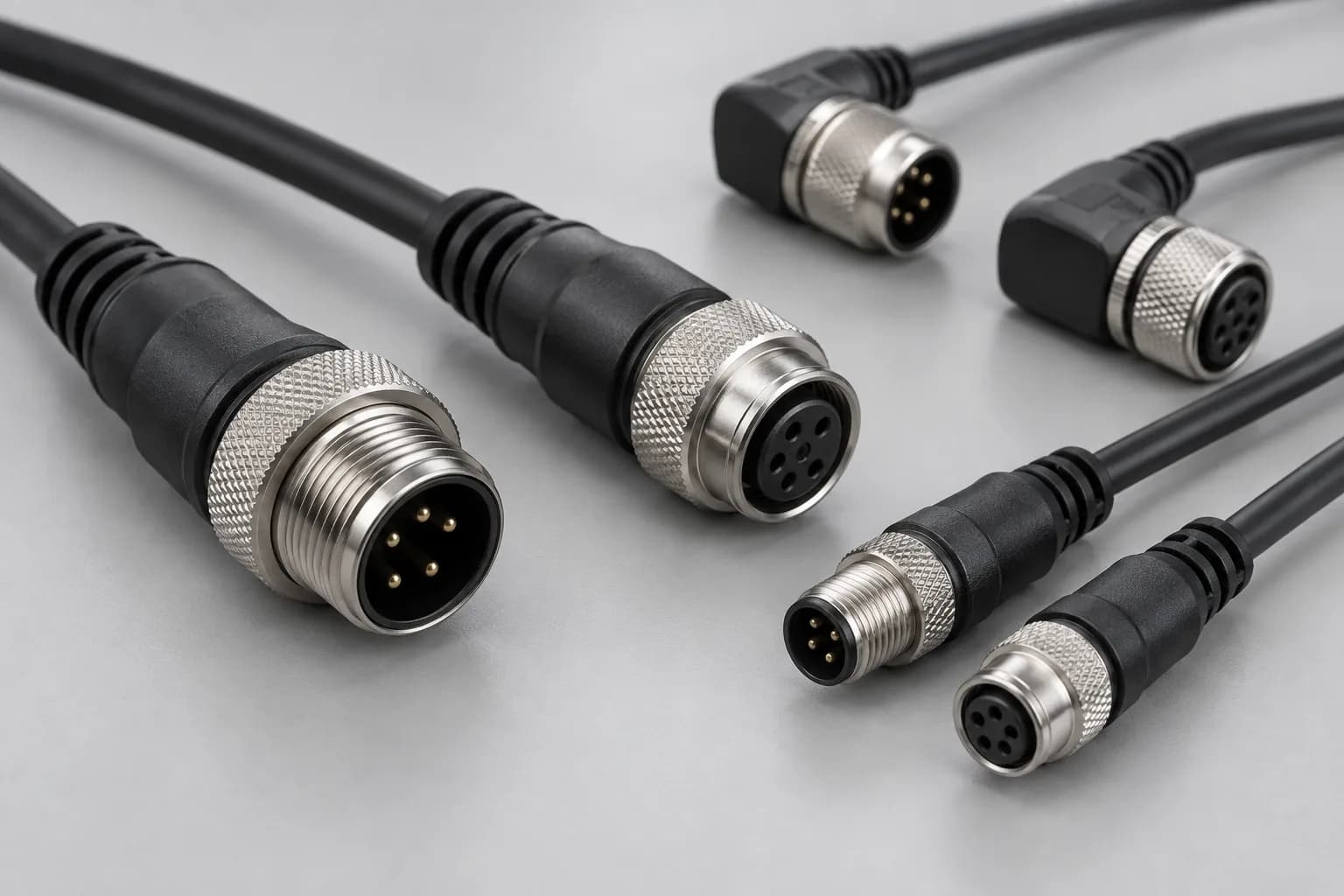
Industrial M12 cordset
Factory sensor and control connections

D-Sub + BNC coaxial harness
Mixed signal · braided EMI jacket

Waterproof panel-mount receptacle
IP67 sealed · cover boot included

Molex Mini-Fit power jumper
Twisted-pair · ring-terminal exit

90° circular metal-shell jumper
Right-angle backshell · 14-pin
Cost Structure Analysis
The Tariff Gap Between China And Cavite Origin.
Since July 24, 2026 the US charges a 12.5% Section 301 forced-labor duty on most products of both China and the Philippines. China-origin goods also carry the older China Section 301 duties, which product that qualifies as Philippine origin does not. The size of the gap depends on your HTS line and base duty, so compute it for your part. Tariff rates have changed several times this year; your customs broker makes the final determination. Pair the origin decision with documented input traceability for UFLPA review.
12.5%
Section 301 on most PH goods
+ legacy
China adds its older 301 duties
Duty Stack · Illustration With Assumed Numbers
| Duty Element | CN Origin | PH (Cavite) |
|---|---|---|
| Base (MFN) duty | 2.6% | 2.6% |
| Legacy China Section 301 | 25% | — |
| Section 301 forced-labor action (Jul 2026) | 12.5% | 12.5% |
| Total ad valorem duty | 40.1% | 15.1% |
| Duty per $10.00 customs value | $4.01 | $1.51 |
Gap in this illustration: 25 points
Illustration only: assumed $10.00 customs value, 2.6% base duty and a 25% legacy China rate. Your tariff line may differ. Source: USTR Federal Register notice of July 28, 2026 and the Harmonized Tariff Schedule. Confirm current rates with your customs broker.
Why Now · Non-China Backup
YOUR PROCUREMENT TEAM IS BEING ASKED FOR A NON-CHINA OPTION.
HERE IT IS.
Since the 2022 UFLPA enforcement ramp and the May 2024 USTR Section 301 review, US-listed OEMs have been under board-level pressure to qualify a second-source supplier outside mainland China. XUDONG Philippines supports that path with Cavite assembly, aligned BOM review, distributor-sourced connector coordination, IATF 16949 quality-system discipline and IPC/WHMA-A-620 workmanship training.
Driver #01
UFLPA: Documented Non-XUAR Supply Chain
The Uyghur Forced Labor Prevention Act presumes goods made wholly or in part in the XUAR — or by a listed entity — are made with forced labor, regardless of where they are finally assembled. Cavite assembly does not by itself exempt a harness; what reduces your UFLPA exposure is a documented, non-XUAR input supply chain. We supply signed declarations and chain-of-custody on the high-risk inputs (cotton, aluminum, polysilicon) so you can support a clear-and-convincing rebuttal if CBP reviews a shipment.
Driver #02
China+1 Without The 18-Month Onboarding
New supplier qualification can be slow when every drawing, connector and work instruction has to restart from scratch. Our parent groups (Xudong + OurPCB / Cloom Tech) maintain BOM library depth, connectors sourced through brand-authorized distributors, and operator training resources that support Cavite sample builds. China+1 sourcing without losing the documentation discipline your existing program expects.
Driver #03
Tariff And Concentration Hedge
Tariff policy keeps changing: Section 301 duties now apply to many economies, and Section 232 duties touch input metals in a typical wire harness. A qualified second origin gives you options when rates move, which a bigger inventory buffer or a forwarder reroute does not. It is a hedge against concentration and policy change, not a guaranteed exemption, so compare the rates for each origin on your own tariff line.
Driver #04
Supply Chain Resilience The Board Asks For
After the 2022 Yantian closures, the Suez Canal block, and the Red Sea routing crisis, every Fortune 500 audit committee asks the same question: where is our second source, and is it on a different geopolitical risk axis? Cavite Economic Zone, US treaty ally, Manila International Container Terminal, weekly sailings to LAX/LGB. That answer is on one slide.
Production Flow
From RFQ
To FOB Manila.
RFQ + DFM
Engineering desk responds in 12 h with quote and DFM call-outs.
Sample & PPAP
First-article sample in 3–5 days. PPAP Level 3 documentation included.
Cut & Crimp
Komax & TE Bench crimp cells, automatic CFM monitoring on every terminal.
Assembly & Mold
Fixture-board assembly with overmold tooling support for strain relief and sealed exits.
100% Test
Cirris continuity + HiPot + dielectric. Serial number printed on every harness.
Pack & Ship
Vacuum-bagged, MICT 30 min away, DHL/FedEx air or Maersk sea on FOB Manila.
Plant Tour · Cavite Economic Zone
TWELVE FRAMES
FROM THE FLOOR.
No stock photography, no rendering. Every image below was shot on the Cavite plant floor in the last six months, on shift, with the actual operators and the actual equipment. Schedule a virtual or in-person audit visit and we'll walk every cell with your QA team.

Cavite Plant · Exterior
Lot 12 Block 16, CEZ Phase IV

Assembly Bay · Day 0
ESD-grade flooring, 12k m²

Crimping Workshop · In Production
Daily four-point cross-section

Terminal Crimping Stations
CJT / Molex / TE die calibration

Automated Wire Cut & Strip
Vision feedback, zero strand damage

Lead-Free Soldering Cell
YJCH 205H, 380 °C ±3 °C

Solder Pot Tinning
SWT-100 SAC305 lead-free

Pull-Force Tester
±5 N calibrated, AWG 22 ≥ 60 N

Microscope Inspection
10× per IPC-A-620 §19

QC Station · Connector Lot Sort
Per-shift first-article sample

Heat-Shrink Inspection
Two-person QC pair

Parts Warehouse · Yellow Bin
MES-bar-coded receiving, lot-tracked
Target Sectors
HIGH-STAKES
INTEGRATION.
Automotive & EV
IATF 16949-aligned lines for EV battery, dash, sensor, and chassis harnesses.
Robotics & Automation
High-flex harnesses for cobots, AGVs, and automated storage systems.
Industrial / Factory
PROFINET, EtherCAT, and IO-Link harnesses with M12 and 7/8" connector capability.
Solar & Energy
UL 4703 PV wire, MC4 connectorization, and high-voltage DC battery harnesses.
IATF
16949 QMS
High
Flex Builds
96h
Salt Fog
100%
Test Coverage
1,200
Components / Box
PPAP3
Doc Level
Quality System
Rigorous Compliance,
Total Traceability.
Every harness leaves Cavite with a serialized barcode that links back to the operator, crimp cell, terminal lot, and Cirris test result. Audit packs are prepared with traceability records, test logs, operator training records and corrective-action documentation when required.
IATF
16949 QMS
Automotive process control
ISO
9001 practices
Certificate held by Hebei Cloom
Class 3
IPC/WHMA-A-620
Default build standard
IPC
A-620 Operators
Workmanship training
Example Serial · WH-PH-EXAMPLE-001
- OperatorL. Reyes (IPC-620 #PH-0331)
- Crimp cellKomax KMK-08 / Tool 42-A
- Terminal lotTE 1-1827587-1 · Example Lot A
- Wire lotLapp Olflex 22 AWG · Example Lot B
- Cirris resultPASS · 142 nets · 0 anomalies
- HiPotPASS · 1500 V AC / 60 s · 0.3 mA
- Audit classIPC-A-620 Class 3
- Ship dateAssigned at dispatch
Illustrative example only. Names, identifiers, and test values demonstrate the record format; they do not document a real build or shipment.
Customer Voice · Anonymized
“We moved a chassis-harness assembly program to Cavite after reviewing the process controls, traceability records, and connector sourcing plan. The team handled the transition with the documentation discipline our quality group expected.”
— Procurement Director, anonymized OEM program
Procurement FAQ
Eight questions
procurement always asks.
Q.01How do tariffs differ between Cavite and China origin?
+
How do tariffs differ between Cavite and China origin?
Q.02What's the smallest order you'll accept and how does pricing change with volume?
+
What's the smallest order you'll accept and how does pricing change with volume?
Q.03Which IPC class do you build to by default?
+
Which IPC class do you build to by default?
Q.04What's the realistic lead time from PO to first shipment?
+
What's the realistic lead time from PO to first shipment?
Q.05Do you offer DFM/DFA review before quoting?
+
Do you offer DFM/DFA review before quoting?
Q.06Can you handle the tooling AND the harness, or just one?
+
Can you handle the tooling AND the harness, or just one?
Q.07How does Cavite production help with our China+1 / non-China alternative mandate?
+
How does Cavite production help with our China+1 / non-China alternative mandate?
Q.08Are your Cavite-origin harnesses UFLPA-compliant?
+
Are your Cavite-origin harnesses UFLPA-compliant?
Next Step
Ship From Cavite, Not Shenzhen
One factory, three assembly services: harness, box build, and the injection-mold tooling behind both. Quote returned within 12 hours. NDA on file. No obligation.